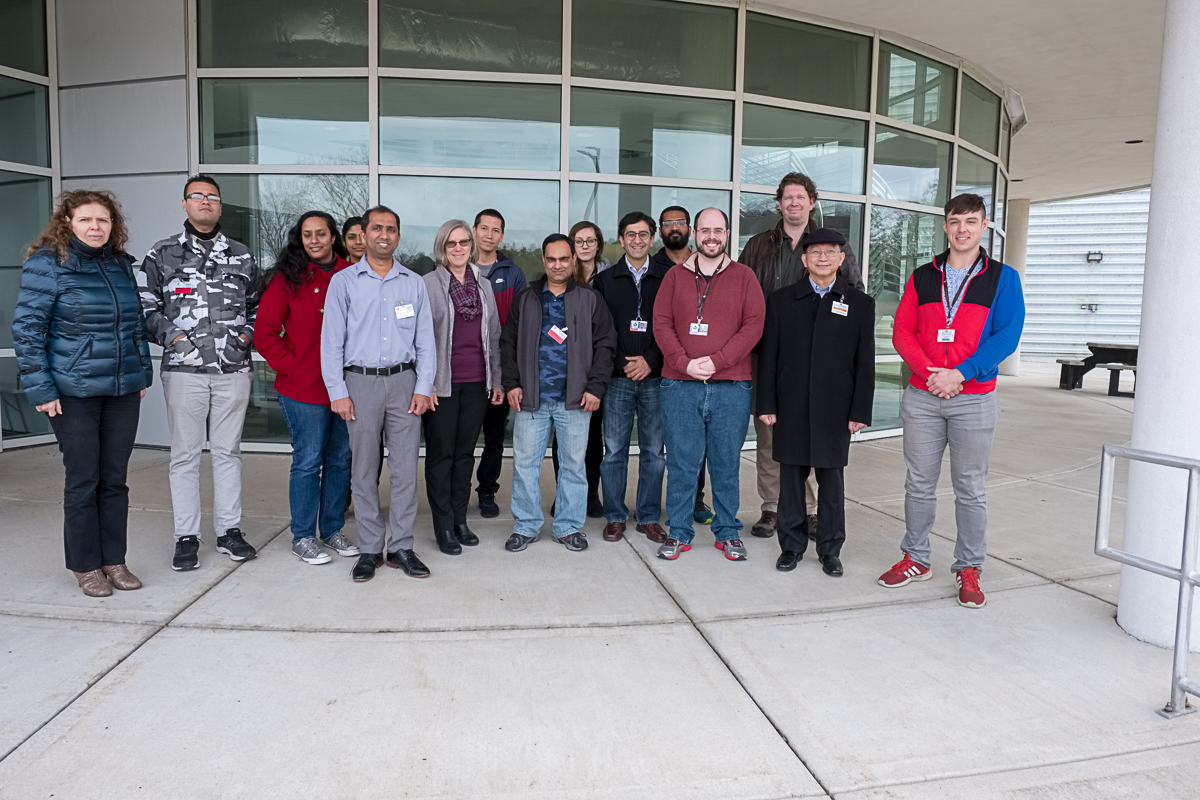
Everything BioSAXS 7 Workshop Wrap-Up
BioCAT held its seventh intensive HOW-TO course in BioSAXS from
3/29/21-4/1/21 with 21 remote participants. There were four
days of lectures and hands-on software tutorials on the basics of
BioSAXS data collection and processing from expert practitioners
in the field. Participants could elect to mail in samples for data
collection prior to the course, and roughly half of them sent
research samples and were able to analyze their own data as part
of the workshop.
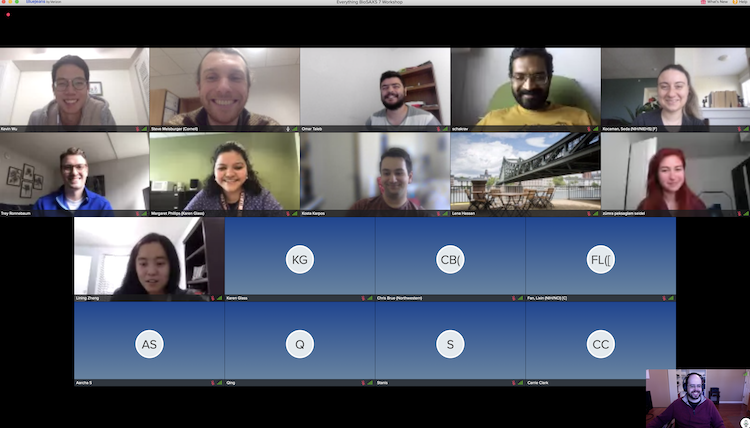
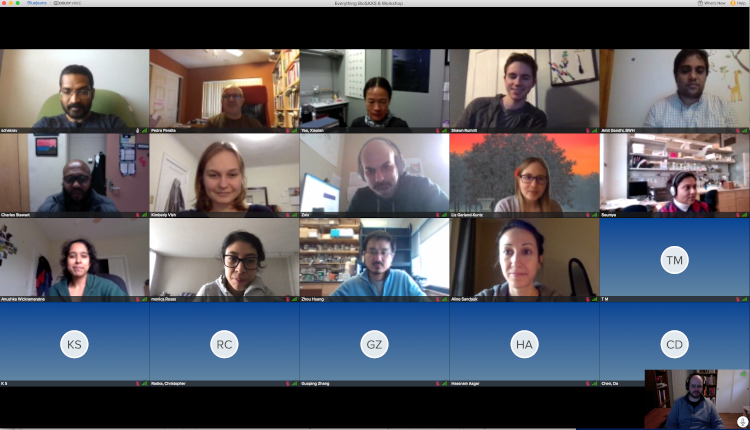
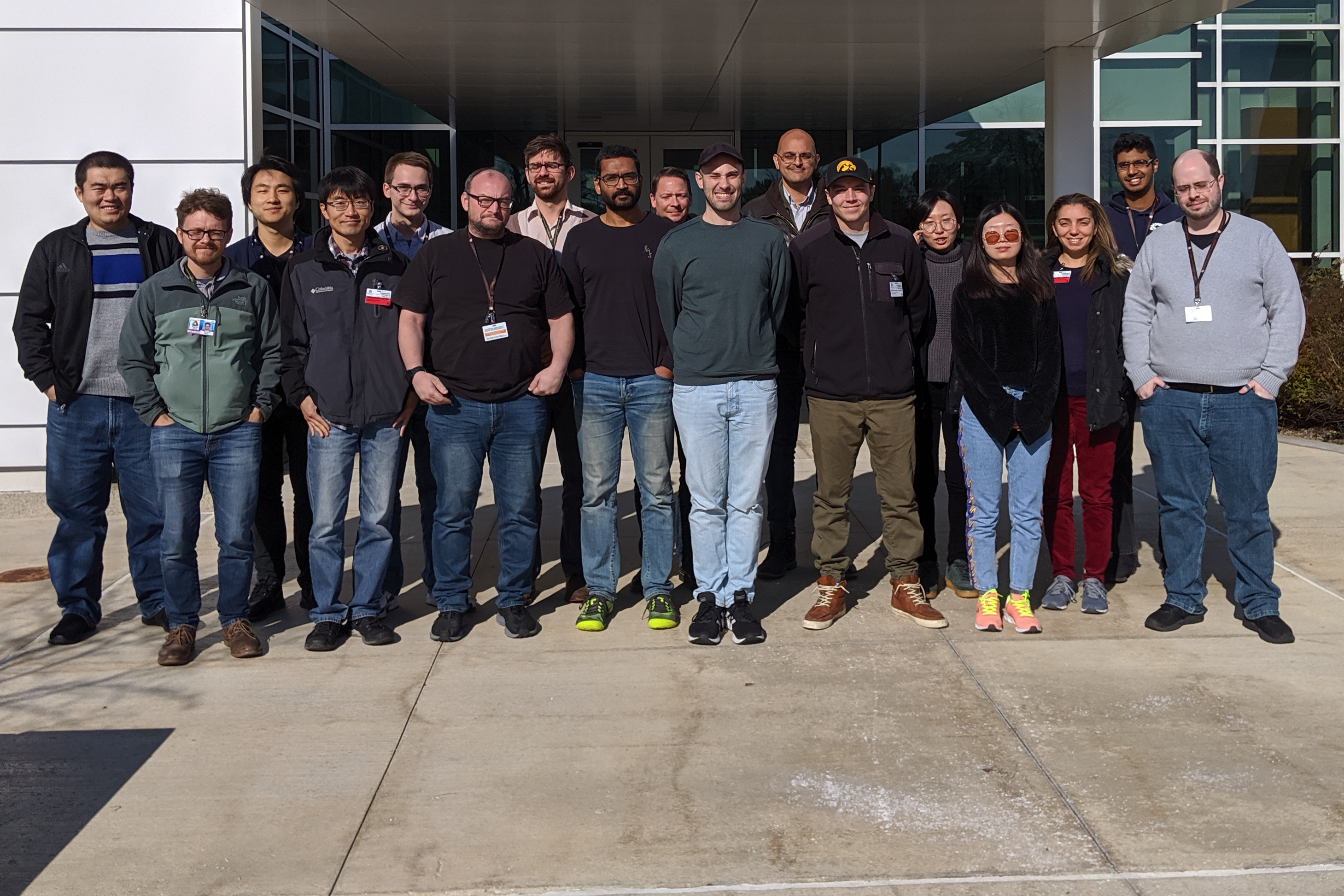
Participants and instructors at the Everything BioSAXS 7 Workshop.
BioCAT held its seventh BioSAXS training course from 3/29/21-4/1/21. There were 21 remote participants and 6 instructors. The workshop was held entirely online, via BlueJeans, for ~4 hours each day. Before the workshop started, participants were able to mail samples to BioCAT for SAXS data collection. This data was then sent to them, and they were able to analyze it as part of the workshop.
Day one started off with an excellent overview of the basic physics of SAXS and what kind of information you can obtain from the technique by Dr. Richard Gillilan (BioSAXS beamline, CHESS). This was followed by a talk from Dr. Jesse Hopkins …
more ...